Co-Parenting the Tooth Fairy: Keeping Magic Consistent
Divorced or co-parenting? Keep tooth fairy magic consistent across two homes with practical tips, communication strategies, and personalized letter solutions.

The Co-Parenting Tooth Fairy: Keeping Magic Consistent Across Two Homes
Picture this: Your daughter loses her first tooth at her dad's house on Tuesday night. She's beyond excited, carefully placing that tiny treasure under her pillow. But you won't see her until Thursday evening—long after the tooth fairy was supposed to visit. Your mind races with questions. Did he remember? What did he leave? How much? Did he write a note? And most importantly, will your version of the tooth fairy match his?
If you've ever found yourself in this exact scenario, you're not alone. Co-parenting brings beautiful opportunities for children to maintain strong relationships with both parents, but it also creates unique challenges when it comes to maintaining consistency in those magical childhood traditions. The tooth fairy, that beloved tiny visitor who celebrates dental milestones, can become an unexpected source of stress when she needs to visit two different homes.
Here's what makes this tricky: unlike other aspects of co-parenting where you might agree to disagree about minor details, the tooth fairy needs to feel like the same magical being, whether she's visiting Mom's apartment or Dad's house. Children are remarkably perceptive, and inconsistencies in how the tooth fairy operates can raise uncomfortable questions or, worse, lead to that dreaded moment when the magic starts to unravel earlier than it should.
Why Consistency in Childhood Magic Matters More Than You Think
Before we dive into the practical strategies, let's talk about why this matters so much. When parents separate or divorce, children experience significant upheaval in their lives. Everything from their daily routine to where they sleep at night has changed. Research on co-parenting shows that consistency across households helps children feel more secure and emotionally stable during this transition.
Magical traditions like the tooth fairy serve a purpose beyond just fun and whimsy. They create a sense of continuity, wonder, and normalcy in a child's life. When the tooth fairy behaves consistently—leaving similar amounts, writing in a recognizable style, maintaining the same "personality"—it sends a subtle but powerful message: Some things stay the same. Some magic remains constant. You're still you, even though your family structure has changed.
Here's something important to remember: Your child isn't just tracking whether the tooth fairy remembered to come. They're subconsciously watching to see if the two most important people in their life—their parents—can still work together to create joy for them. The tooth fairy becomes a symbol of your ability to cooperate for their benefit.
Consider what happened to a family in the Midwest, as shared by divorce coach Christina McGhee. A little girl named Bailey lost her tooth and was told by her father that the tooth fairy was "much better" at his house. She woke to find twenty dollars under her pillow. When she excitedly called her mother, who typically left just a few dollars, it created immediate tension and confusion. Bailey ended up with forty dollars total, but imagine the uncomfortable position she was in—caught between two parents who were clearly competing rather than cooperating. That's not the magic we want our children to remember.
Before We Go Further: The Magic of Personalized Letters
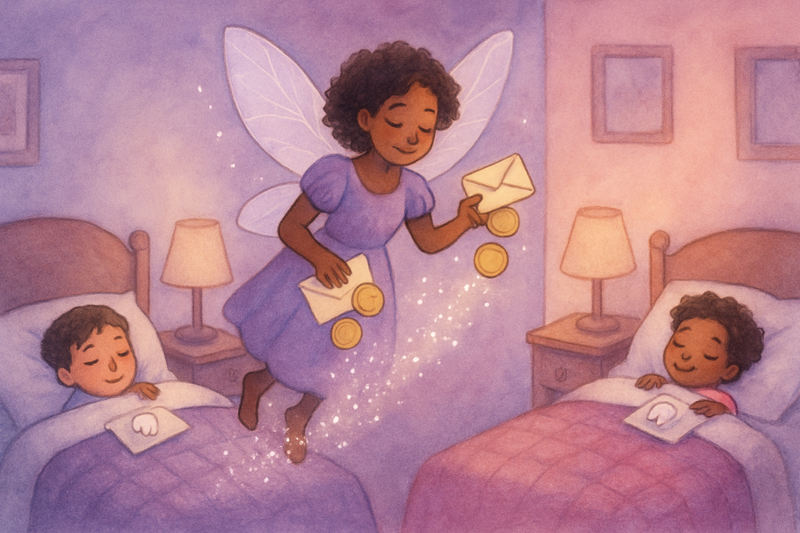
While we're focusing on tooth fairy strategies for co-parenting today, imagine having personalized letters for every childhood milestone—Santa visits, Easter morning, first day of school, birthdays, and twenty-plus other magical occasions. That's exactly what The Magic Letter Box provides: unlimited custom letters for all of childhood's special moments. Think of it as your secret weapon for creating consistent, meaningful magic across all celebrations, whether your child is at your home or your co-parent's. When you're managing traditions across two households, having a centralized tool that both parents can access ensures that Santa's handwriting matches, the Easter Bunny's personality stays consistent, and every magical character speaks with the same voice—no matter which doorstep they visit.
Creating Your Co-Parenting Tooth Fairy Playbook
Now, let's build something practical together. What you need is a "Tooth Fairy Playbook"—a simple, agreed-upon set of guidelines that both households will follow. This doesn't need to be a formal legal document (though you can certainly include it in your parenting plan if that helps). Think of it as a friendly agreement that puts your child's experience first.
The First Conversation: Before That First Tooth Wiggles
The absolute best time to have this conversation is before your child loses their first tooth. I know—you're probably thinking, "I've got enough to discuss with my ex without adding the tooth fairy to the list." But trust me on this: five minutes of planning now will save you from awkward text exchanges at midnight when your child's tooth unexpectedly falls out at the other parent's house.
Find a calm moment, maybe during a regular co-parenting check-in, and bring it up casually: "Hey, [child's name] has a loose tooth. Should we talk about how we want to handle the tooth fairy at both our places?" If this will be your child's very first tooth fairy experience, you might find our comprehensive guide to first tooth fairy visits helpful for establishing traditions that work across both homes from the very beginning.
Here are the key questions to align on:
The Tooth Fairy's "Personality" and Lore: Does your tooth fairy leave just money, or does she also leave little notes? Does she have a name? Does she use fairy dust (glitter)? What's her backstory—does she build castles out of teeth, plant them in magical gardens, or something else entirely? Getting aligned on these details means your child experiences the same fairy, regardless of location.
The Going Rate: This one causes more tension than you'd expect. Money amounts for tooth fairy visits have skyrocketed over the years—some reports suggest averages of five dollars or more per tooth. Decide together what amount makes sense for your family's financial situation. Remember, this should be about consistency, not competition. If one parent can afford more, it doesn't make them the "better" parent. What matters is what works for both of you.
Special Circumstances: First tooth? Molars? Will these get special treatment? Some families pay more for the first tooth or the particularly stubborn ones that took forever to fall out. Align on these variations ahead of time.
The Note Situation: If you're going to include notes from the tooth fairy, you need to ensure they sound like they're coming from the same fairy. This is where things can get tricky if one parent is particularly creative and the other prefers simplicity.
The Travel Pack Solution: Be Prepared at Both Houses
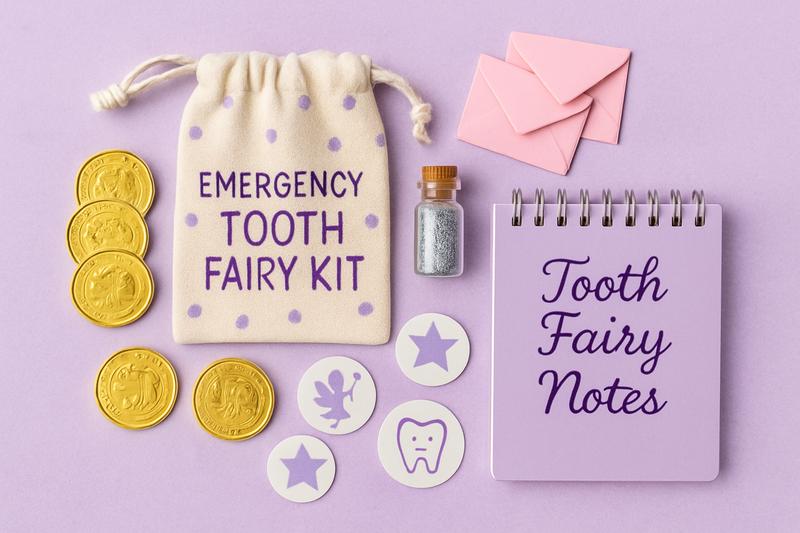
One of the smartest moves you can make is ensuring that both homes have a "Tooth Fairy Emergency Kit." It sounds a bit silly, but having supplies ready means no last-minute panic runs to find quarters at 11 PM when you suddenly remember your child's tooth is under their pillow.
Each parent should have:
A small container of coins or bills in the agreed-upon amount—keep several on hand so you're never caught unprepared. A tiny bit of "fairy dust" (craft glitter) if that's part of your tradition. This should be the same color at both houses. Special small envelopes or paper if you're doing notes. If you're writing personalized notes, having a template or agreed-upon style helps maintain consistency. A designated safe spot where these supplies live, so they're always findable in the middle of the night.
Think of this kit like you'd think about keeping basic first aid supplies at both homes. It's just part of being prepared for the predictable moments of childhood.

Navigating the Logistics: When Teeth Have No Respect for Custody Schedules
Here's the reality: teeth fall out when they fall out. They don't check the custody calendar first. So let's talk through some common scenarios and how to handle them gracefully.
Scenario 1: The Tooth Falls Out Mid-Week at the Other Parent's House
Your child loses a tooth on Wednesday at Dad's house, but they're with you on weekends, and you were really looking forward to being part of this milestone. It stings a little, doesn't it? That's a normal feeling. But here's what matters: your child's excitement shouldn't be dampened by your disappointment.
The tooth fairy should absolutely visit that night at the house where the child is sleeping. Then, when your child comes to your house, you get to share in their excitement. Ask to see the gap in their smile. Make a big deal about how grown-up they're becoming. Maybe the tooth fairy even left a special note mentioning something specific to your child that you shared with your co-parent.
Here's where personalized tooth fairy letters become invaluable. Instead of one parent trying to mimic the other's handwriting or note style, both parents can create consistent, personalized letters that maintain the same magical voice, ensuring your child experiences a seamless tooth fairy presence at both homes.
Scenario 2: The Forgotten Fairy (It Happens to the Best of Us)
Let's be honest: even the most prepared parent occasionally forgets to play tooth fairy. You're exhausted, you fell asleep before remembering, or life just got in the way. When you're co-parenting, this situation can feel even more stressful because you might worry about looking irresponsible or giving your ex something to criticize.
First: take a breath. This happens to parents everywhere, single households included. The key is how you handle it. We've compiled an entire guide with genius solutions for when the tooth fairy forgets, and many of these strategies work exceptionally well in co-parenting situations. Here are some tried-and-true "saves" that have worked for many families, with a co-parenting lens:
The "Busy Night" Explanation: Many parents have successfully explained that the tooth fairy had an especially busy night and will come tonight instead. Young children typically accept this without much questioning. You might even send a quick text to your co-parent: "Had a tooth fairy fail last night—using the 'busy night' story." This keeps everyone on the same page if your child mentions it later.
The "Stuck Tooth" Note: The tooth fairy can leave a note explaining she couldn't get the tooth out from under the pillow because the child was sleeping too soundly on it, so she'll return tomorrow. Child development experts emphasize that maintaining magic and consistency during major transitions helps children cope, and a graceful recovery from a tooth fairy mishap is part of that consistency.
The Solidarity Approach: If you're on decent terms with your co-parent, you might even text early the next morning: "I completely forgot last night—can you do it tonight at your place if they mention it?" Sometimes tag-teaming a solution works beautifully and shows your child that both parents are committed to their joy.
Scenario 3: The Tooth Gets Lost Between Houses
Your child loses their tooth at your house, carefully stores it, and then loses the actual tooth somewhere during the transition to their other parent's house. Or maybe they lose it at school, and no one can find it by bedtime. What happens when there's no tooth to actually put under the pillow?
Good news: the tooth fairy has seen it all. In these situations, your child can write a note to the tooth fairy explaining what happened and put that under their pillow instead. The tooth fairy (you) can respond with an understanding note saying that she knows accidents happen and still wants to celebrate their growing-up milestone.
If this happens at the other parent's house, a quick text keeps everyone informed: "Just so you know, [child] lost the actual tooth somewhere today, but we're doing the note method tonight."
The Power of a Consistent Voice: Letters That Bridge Two Homes
Here's where many co-parenting situations can create the most meaningful magic—or the most visible inconsistency. If you're including personalized notes from the tooth fairy (which many families do because they add such special touches to the experience), you need those notes to sound like they come from the same fairy.
Imagine your child receiving an elaborate, poetic letter full of fairy lore at one parent's house, and then a quick "Good job! –TF" at the other. Or picture the confusion if one note mentions specific details about your child's interests or recent achievements, while notes at the other home are generic and impersonal. Kids notice these things, even if they don't articulate why something feels "off."
This is precisely why many co-parenting families have discovered that using a tooth fairy letter generator creates the perfect solution. Both parents can access the same tool, ensuring that the letters—whether created at Mom's house or Dad's house—maintain a consistent voice, similar level of detail, and the same magical personality. The fairy always remembers your child's name, can mention recent accomplishments that both parents input, and sounds like the same beloved character each time.
Consider creating letters that specifically acknowledge and praise aspects of your child's life at both homes. For example: "I heard you've been so brave about your loose tooth, and you even showed it to your soccer coach at practice this week! I also know you've been helping make dinner at both Mom's and Dad's houses—what a helpful growing-up kid you are!" This kind of letter, which recognizes the child's whole life, not just what happens at one house, reinforces that they're the same loved child in both places.
Sample Tooth Fairy Letter Themes for Two-Home Families
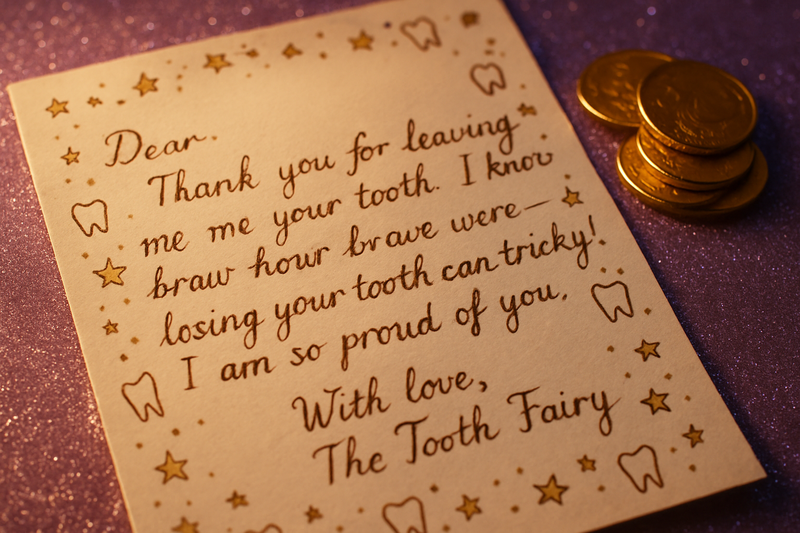
Let me share a few examples of letters that work beautifully for children in co-parenting situations. These aren't about pretending the divorce didn't happen or avoiding reality—they're about reinforcing what remains constant: both parents' love and pride in their growing child.
The "Adaptable Kid" Letter: "Dear [Name], I've been watching you grow up, and I have to tell you—you're one of the bravest, most adaptable kids I've ever met! You handle having two homes with such maturity and grace. Losing this tooth is just another sign that you're growing stronger and more capable every day. Both your mom and dad are so proud of you. Keep brushing those teeth at both houses! Love, The Tooth Fairy"
The "Big Kid Journey" Letter: "Hello [Name]! Another tooth! You're becoming such a big kid. I love that you take such good care of your teeth whether you're at Mom's house or Dad's house. That tells me you're responsible and consistent—such important grown-up qualities! I left you something special under your pillow tonight. Sweet dreams, wherever you wake up tomorrow! The Tooth Fairy"
The "Magic Follows You" Letter: "Dearest [Name], Did you know that my magic can follow you anywhere? It doesn't matter which house you're in—I always know where to find you because your bright smile and kind heart shine like a beacon! You lost a tooth today, and that means you're growing up beautifully. Keep being the wonderful kid you are. The Tooth Fairy"
Notice what these letters do: they normalize having two homes without making it seem sad or problematic. They emphasize consistency in the child's character and behavior across both environments. They subtly reinforce that both parents are involved and proud, even when they live separately.
When Co-Parents Can't (or Won't) Cooperate
Let's address the elephant in the room. Not all co-parenting relationships are cooperative. Maybe you've tried to have the tooth fairy conversation and your ex dismissed it, refused to engage, or deliberately does things differently to undermine your attempts at consistency. Or perhaps communication is so limited that coordinating something like the tooth fairy feels impossible.
If you're in this situation, I see you, and I want you to know that your child can still have beautiful tooth fairy experiences, even if they're not perfectly identical at both homes. Here's what you can control:
Focus on your house: Create the most magical, loving tooth fairy tradition you can in your home. Be consistent in your approach every single time. Your child will remember the care and thoughtfulness you put into their milestones, regardless of what happens elsewhere. Our complete tooth fairy guide for parents offers comprehensive strategies for building meaningful traditions, even when you're only managing one household.
Don't compete or criticize: If your child mentions that the tooth fairy did something different at the other house, resist the urge to say anything negative about it. You might say something like, "Oh, how interesting! The tooth fairy must have known exactly what would make you happy at Dad's house. She's pretty clever like that." Frame differences as the tooth fairy being adaptive rather than one parent being wrong.
Make your version special in its own way: Maybe you always include a personalized letter. Maybe your tooth fairy leaves a special kind of coin. Maybe there's always a tiny bit of glitter on the windowsill. Create a signature touch that makes the tooth fairy visits at your house memorable for their own reasons.
Document the joy: Take photos of your child's gap-toothed smile, save the letters, create a little tooth chart. These mementos show your child that you valued and remembered these moments, and that's what they'll carry into adulthood.
Remember, children are remarkably resilient and can adapt to different approaches in different homes. What matters most isn't perfect uniformity—it's your genuine investment in their happiness and growth.
Beyond Money: Alternative Tooth Fairy Gifts That Work Across Two Homes
Many families are moving away from cash-only tooth fairy visits and incorporating small, meaningful gifts instead. This approach can work exceptionally well in co-parenting situations because it reduces the financial comparison aspect and focuses more on thoughtfulness. For a comprehensive look at creative alternatives, check out our guide to tooth fairy gifts beyond coins.
Consider these alternatives that both parents can easily implement: Small books (both houses can build toward a collection). Special coins (like dollar coins or foreign currency—create a collection together). Tooth fairy "certificates" or "big kid coupons" redeemable for special activities with that parent. Small toys from the dollar section that fit a theme your child loves. Natural treasures like pretty rocks, shells, or crystals. Miniature art supplies or craft materials.
The key is agreeing on a general type or value range so gifts feel comparable without needing to be identical. Your child gets to enjoy surprises at both homes without feeling like one parent is trying to outdo the other.
Creating a Unified Tooth Chart Across Two Homes
Some families keep a tooth chart tracking which teeth have been lost and when. In a two-home situation, this can be tricky since the physical chart might live at only one house. Consider these solutions:
A portable tooth chart: Create a special folder or small book that travels with your child between homes, where both parents can record tooth losses. Each parent notes the date, location, and maybe draws a little star or sticker. This becomes a shared record of your child's growing-up journey.
Digital tracking: Use a shared app, document, or even a private Instagram account where both parents can post photos and updates about tooth losses. Your child gets to see a complete record regardless of which home they're in.
Duplicate charts: Each house has its own chart, and you coordinate to keep them updated. This works well if communication is good and you both commit to sharing information after each tooth loss.
These seemingly small touches send a powerful message to your child: both parents are paying attention, working together, and celebrating their milestones as a united front—even if you don't live in the same house anymore.
The Tooth Fairy as Practice for Bigger Milestones
Here's something important to recognize: how you handle the tooth fairy is actually practice for how you'll handle countless other milestones and transitions in your child's life. Graduations, driving lessons, first dates, college applications—all of these will require coordination, consistency, and putting your child's needs ahead of any lingering relationship tension.
The tooth fairy might seem like a small thing, but it's teaching you and your co-parent how to work together toward a common goal: your child's happiness and sense of security. Each successful tooth fairy visit at either home is a little victory that proves you can cooperate when it matters.
It's also teaching your child something profound about adaptability and love. They're learning that magic doesn't disappear just because circumstances change. They're discovering that both parents care about the same things—their joy, their growth, their belief in wonder. These are lessons that will serve them well throughout their entire lives.
Ready to Create Tooth Fairy Magic That Travels Between Homes?
Maintaining consistency across two households doesn't have to mean more work—it just requires the right tools. Try our free tooth fairy letter generator and create up to 3 personalized letters per day, ensuring the tooth fairy's voice stays consistent no matter which home your child wakes up in. Both parents can use the same tool for the same magical experience.
Looking ahead to other celebrations? The Magic Letter Box provides unlimited personalized letters for every childhood milestone—from Santa and the Easter Bunny to first day of school and birthdays. It's your complete solution for creating consistent, meaningful magic across all occasions and both households.
Final Thoughts: The Gift You're Really Giving
When you coordinate tooth fairy visits across two homes—whether that coordination is seamless or requires a bit more effort on your part—you're giving your child something more valuable than money under a pillow. You're giving them the gift of consistency, the reassurance that magic still exists in their world, and the lived experience that their parents can still come together, in whatever way possible, for their benefit.
Years from now, your child won't remember exactly how much money the tooth fairy left or even precisely what she wrote in her notes. But they will remember the feeling of waking up to find that the tooth fairy knew where to find them, no matter where they slept. They'll remember that losing teeth was exciting and magical, not complicated or confusing. They'll remember that both their parents cared enough to keep the magic alive.
Co-parenting isn't always easy, and navigating childhood traditions across two households adds an extra layer of complexity to an already challenging situation. But when you can create these pockets of consistency and joy—these small traditions that transcend the divorce and focus purely on celebrating your child—you're building beautiful memories that will last long after the last baby tooth has fallen out.
The tooth fairy might be imaginary, but the love, cooperation, and care you demonstrate through maintaining her visits? That's very, very real. And that's the magic your child will carry with them forever.